
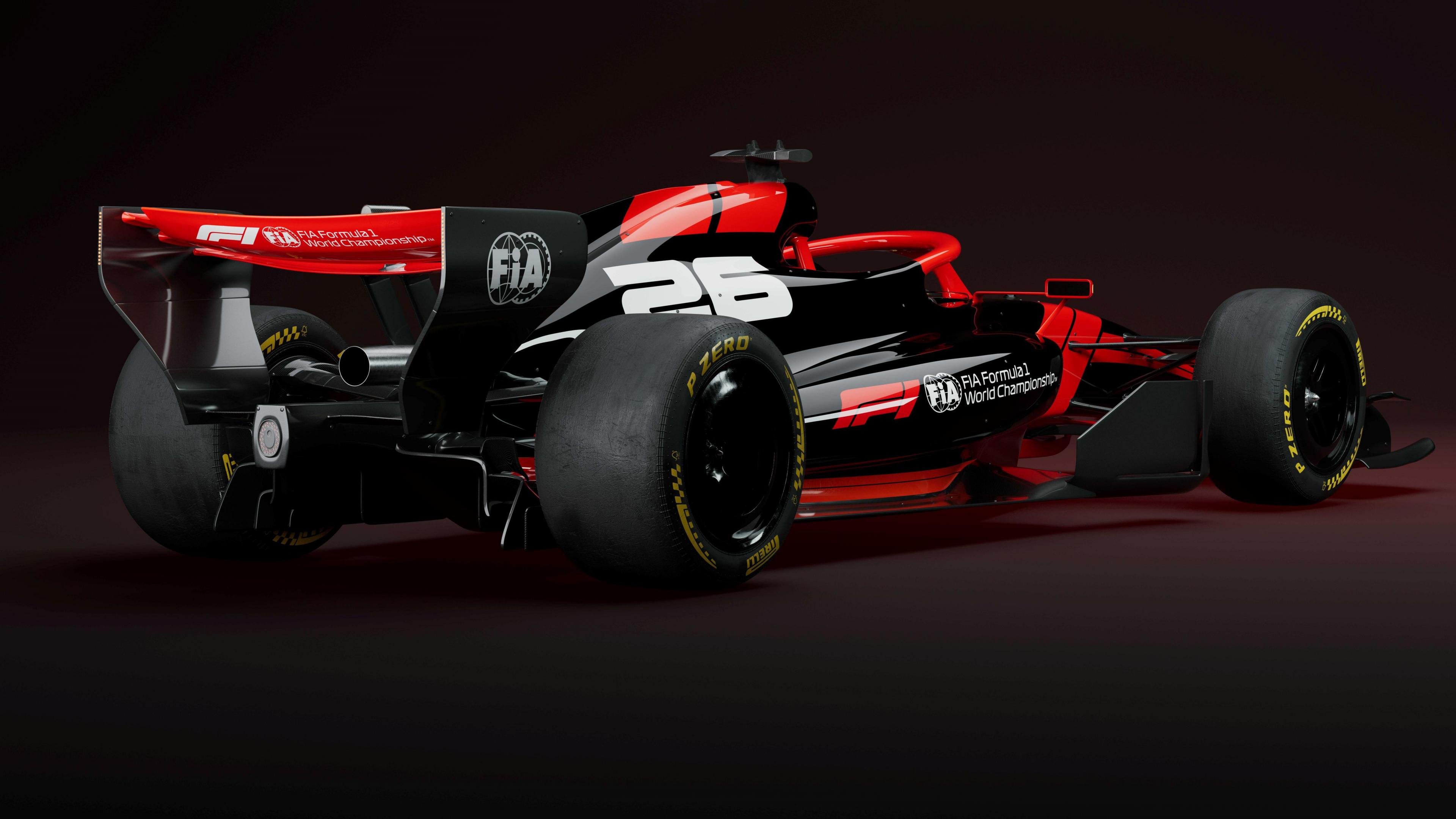
The vehicles for the 2026 season are designed to be more compact, agile and eco-conscious relative to present-day cars.
The world of Formula 1 has introduced the new terminology that will be used to explain the intricate details of its upcoming 2026 technical rules.
The championship is implementing what is considered the largest technical shift in its illustrious history for the 2026 campaign, featuring fresh chassis and power unit regulations and the compulsory introduction of fully sustainable fuels.
The revised engines, which maintain the hybrid V6 layout, boast a substantially higher battery power, necessitating significant developments in the aero packages.
Over a race distance, competitors will strategically manage ERS energy – potentially on flying laps – to extract the peak lap time.
Broad surveys were carried out with a mix of viewers, including long-time followers and newcomers, to understand which phrases would improve understanding of the key features of the upcoming rules.
The primary aim was to make a range of advanced new areas of the sport as accessible as possible for the global fanbase.
Consequently, previous placeholder terms for specific components – such as "modes labelled X and Z" for the active aerodynamics – have been discarded in preference for straightforward terms that succinctly convey the primary purpose of the technology.
Exploring the New Tech
According to rule-makers that racers will have more power to choose strategies regarding battery management, harvesting, and saving energy.
The upcoming changes introduce a series of modes that will be visually displayed on television graphics to aid the fans' insight of the race battle.
- Overtake Mode: This replaces the current DRS. It provides a burst of extra electrical energy available when a driver is less than a second the car ahead to assist with an overtake.
- Boost Mode: This is a driver-operated energy deployment from the ERS that can be deployed for attack or defence. It provides the driver peak output at the push of a button.
Both of these crucial modes will have to be managed carefully, as the overall battery capacity is capped.
- Active Aero: Both the car's wings move automatically – flattening on the high-speed sections for reduced drag and top speed, and angling down in the bends for optimal cornering performance.
- Recharge: Cars can recharge the energy store with regenerative braking, or during partial power application at the conclusion of a straight or in sections where only partial power is applied.
Car Design Evolution
The next-generation machines will be more compact and lighter than this year, with a distance between axles shortened by 200mm to 3,400mm, overall width narrowed by 100mm – down to 1,900mm – and the lowest permissible weight decreased by 30kg.
Overall downforce is expected to drop by approximately fifteen to thirty percent, although teams will naturally regain performance as they optimize their packages.
Air resistance has been cut by 40%. The cars will employ moveable wing elements – front and rear wings will move on the straight sections to improve speed and increase straightline speed and click back into place for optimal grip in corners.
Tyres will keep the current rim size, but the rubber compounds will be reduced in width, by a quarter-centimetre on the front and 30mm at the rear.
Power Unit Revolution
The revised hybrid units will have an near-equal balance in horsepower generated by the petrol engine and the battery and motor, increasing from about one-fifth electric power under present rules.
The energy recovery system is made less complex through the elimination of the Motor Generator Unit – Heat, the sophisticated and pricey unit that generated electricity from the turbo.
Every car on the grid will be obliged to compete on 100% sustainable fuel, created from organic sources or synthetic production methods.


